CANADIAN BADLANDS · THE WHOLE REGION · BIG SKIES
Big skies by season: heat, storms and long light
Out here the sky takes up most of the view, and it changes fast. A season-by-season guide to the weather over the plain and in the valley, and how to plan around it.
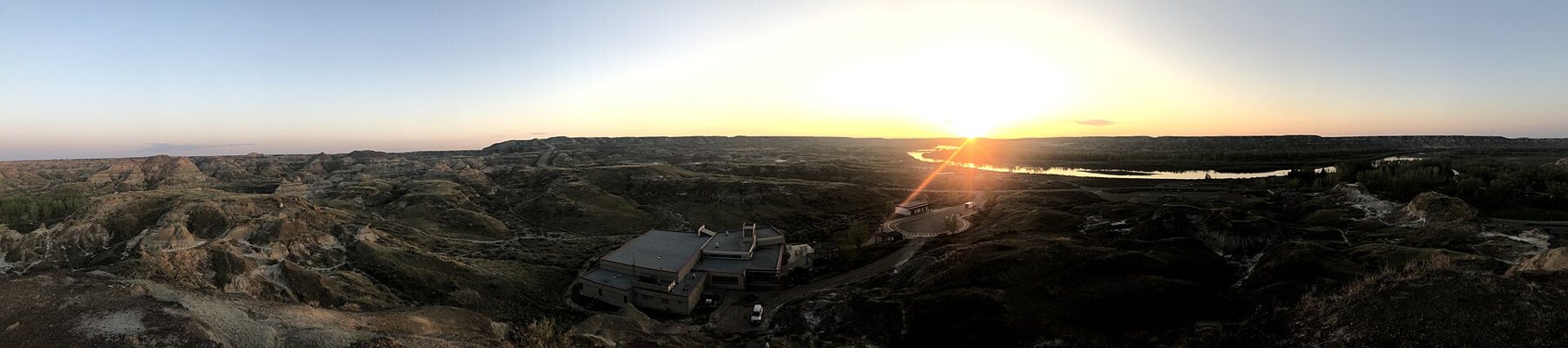
Stand on the prairie near Hanna and the sky fills almost everything you can see. The land is a thin strip at the bottom of the view; above it, clouds stack and drift and break for a hundred kilometres in every direction. In the Red Deer River valley the sky shrinks to a band between the rims, and the weather feels different again: hotter, stiller, closer. Knowing what the sky is likely to do, season by season, makes a trip here easier and often more beautiful.
This is a dry region. East-central Alberta lies in the rain shadow of the Rocky Mountains, and much of it gets less rain than almost anywhere else in the province. The same dryness that made farming hard here makes the sky clear, the light sharp and the stars bright.
Late spring: green coulees and changeable days
May and June are the gentlest months in the Badlands. The coulees turn green, the prairie flowers, and temperatures in the valley are usually pleasant for walking. They are also changeable months. A warm, still morning can end in a cold wind and showers, and late snow is not unheard of in May. Rain on the badland clay turns trails slick for a day or more, so watch the forecast and be ready to switch a hike for a museum.
June brings the longest days of the year. At this latitude the sun sets late in the evening, and twilight lingers well beyond that. Evenings on the Dinosaur Trail viewpoints or the rim above the hoodoos are long and golden.
Summer: heat in the valley, storms on the plain
July and August are hot. The valley floor around Drumheller traps heat, and the bare slopes reflect it, so the temperature on a badland trail in the afternoon can feel far higher than the forecast suggests. Walk early or late, carry more water than seems sensible, wear a hat, and rest in shade when you find it.
Summer is also storm season on the plain. Warm, moist air rises on hot afternoons and builds into towering thunderstorms, some of them with hail. You can often watch them grow from a long way off, which is one of the great sights of the prairie. Respect them all the same: if thunder is close, leave exposed ridges and viewpoints, stay out of narrow gullies where water can run suddenly, and wait in your car rather than under an isolated tree.
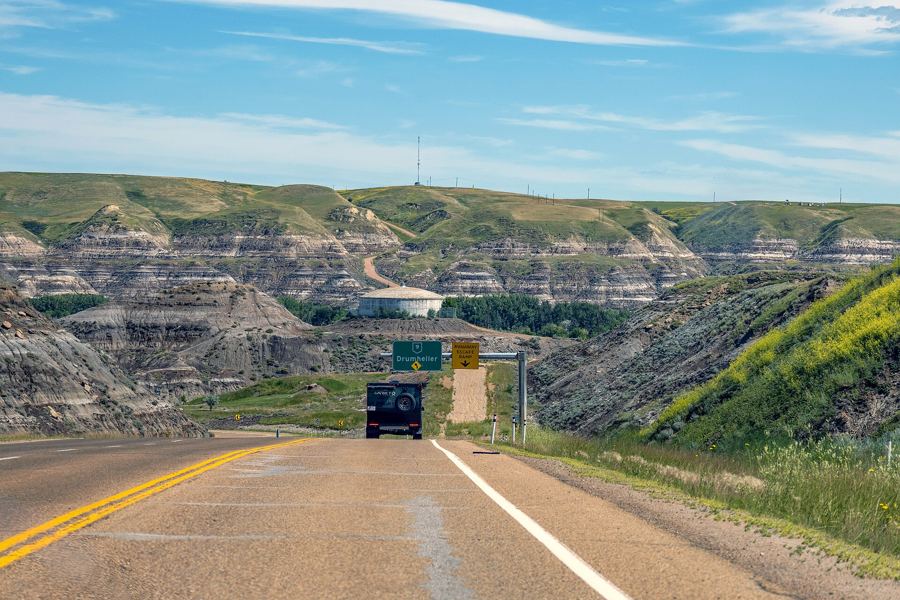 Further along the horizon · From 80 km east to townFrom Hanna to the rim on Highway 9
Autumn: harvest light and quiet trails
September is many people's favourite month. The heat eases, the summer crowds go home, and harvest fills the plain with machinery and golden stubble. The low autumn sun lights the bands of rock in the valley beautifully, especially in the first and last hours of the day. Nights turn cold, and the first frost can arrive early in the month.
By October the cottonwoods along the Red Deer River turn yellow, and some seasonal attractions close or shorten their hours. It is a good time for the museums and for walks, as long as you dress for cool, windy days.
Autumn is also migration season. Long skeins of geese pass over the plain, calling, and sandhill cranes sometimes stop in the stubble fields. On still autumn evenings, the sky over the prairie can turn from gold to pink to deep blue in the space of half an hour, with the geese still moving across it.
Winter: cold, clear and chinook-warmed
Winter on the prairie is long and can be very cold. Deep cold snaps bring temperatures far below freezing, with wind that makes them feel colder still. Roads can drift over in blowing snow. Travel with a full tank, warm clothes and an emergency kit.
Then a chinook arrives. These warm, dry winds from the west can raise the temperature dramatically in a few hours, melting snow and leaving the hills brown again in midwinter. Under a chinook arch, a band of clear sky beneath a long edge of cloud lies over the western horizon. Snow on the hoodoos and badland ridges, under that blue sky, is a sight few visitors see.
Winter days are short, and the sun stays low even at noon, so shadows are long all day. That low light gives the snow-dusted badlands a sculpted look, every ridge and gully outlined. Trails are often icy, so carry traction aids if you plan to walk, and stay well back from edges where snow hides the drop.
Nights: stars and the chance of aurora
Away from the towns, the night sky here is dark. On clear, moonless nights the Milky Way stretches overhead in summer, and the stars come right down to the flat horizon. Dinosaur Provincial Park and the open country around Hanna are especially good. The northern lights are possible on active nights, usually as a glow or arc low in the northern sky, sometimes much more. Watch for aurora forecasts, find a dark pull-off well away from the road, and give your eyes time to adjust.
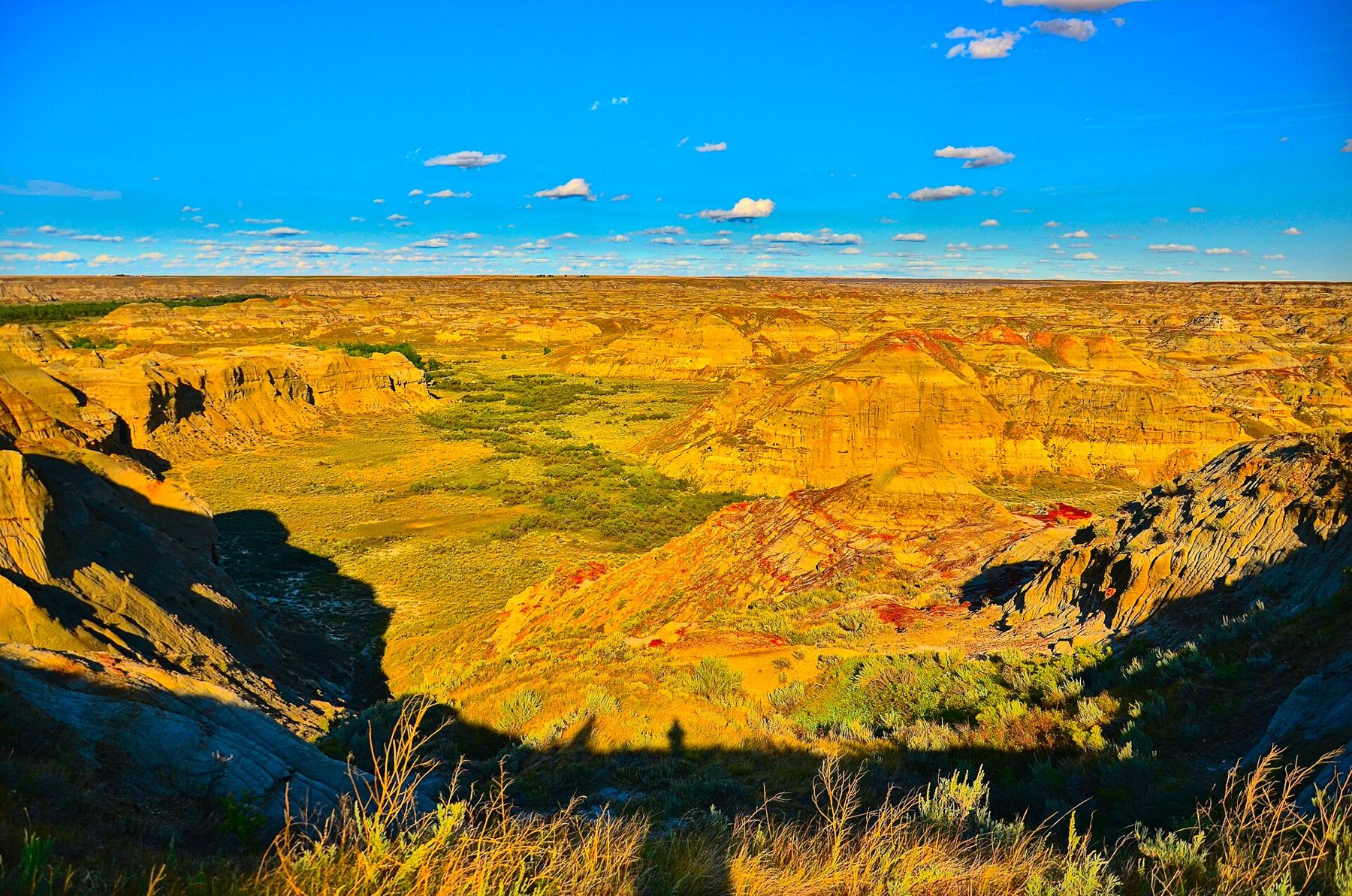
Planning around the sky
- Plan outdoor walks for mornings and evenings in summer.
- Keep a museum or an indoor stop in reserve for rain or storms.
- Leave badland trails alone for a day after heavy rain.
- In winter, check road reports and carry warm gear in the car.
- Check weather warnings each morning; storms can build quickly.
The sky is half the reason to come. Give it time, and pick a few places to watch it from: the rim above Horseshoe Canyon, the open plain near Hanna, or the badlands of Dinosaur Provincial Park at sunset.