EAST COULEE · ABOUT 20 KM SOUTH-EAST · COAL, GRAIN AND RAIL
Atlas Coal Mine: what the tipple did
At the far end of the valley road, a tall wooden building leans against the hills at East Coulee. It sorted coal for decades and still explains the valley better than any sign.
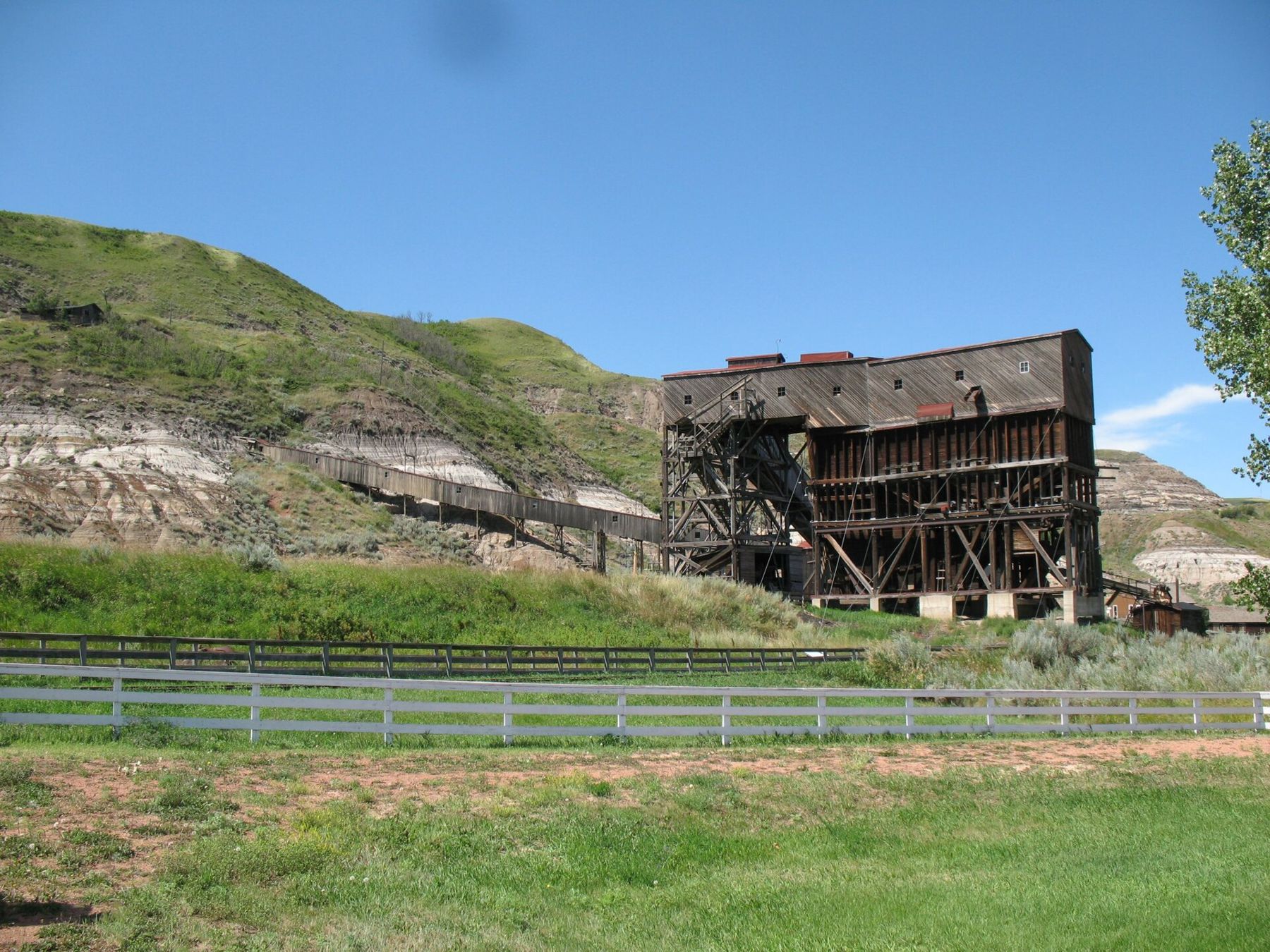
Highway 10 follows the Red Deer River south-east out of Drumheller, past Rosedale and the hoodoos, until the valley widens and the road reaches East Coulee. Beside the river, a strange wooden tower stands against the slope: several storeys of grey boards and timber framing, with a long sloping gallery running up the hill behind it. This is the tipple of the Atlas Coal Mine, now a National Historic Site, and the most complete reminder of the industry that built the towns of this valley.
A valley built on coal seams
The same banded rock that holds dinosaur bones also holds coal. The darker seams in the hillsides are compressed plant matter from swamps and forests that grew here near the end of the age of dinosaurs. Commercial mining began in the valley early in the twentieth century, and the railway soon followed. Over the next decades, well over a hundred mines were registered along this stretch of the Red Deer River, from small family operations to large company pits.
Most of the coal was a soft, clean-burning type well suited to heating homes, and it was shipped by rail across the prairies. Demand rose each autumn and fell in summer, so work was seasonal and uncertain. When oil and natural gas replaced coal for home heating after the Second World War, the mines closed one by one. Atlas was among the last to keep working, into the late 1970s.
Inside the tipple's work
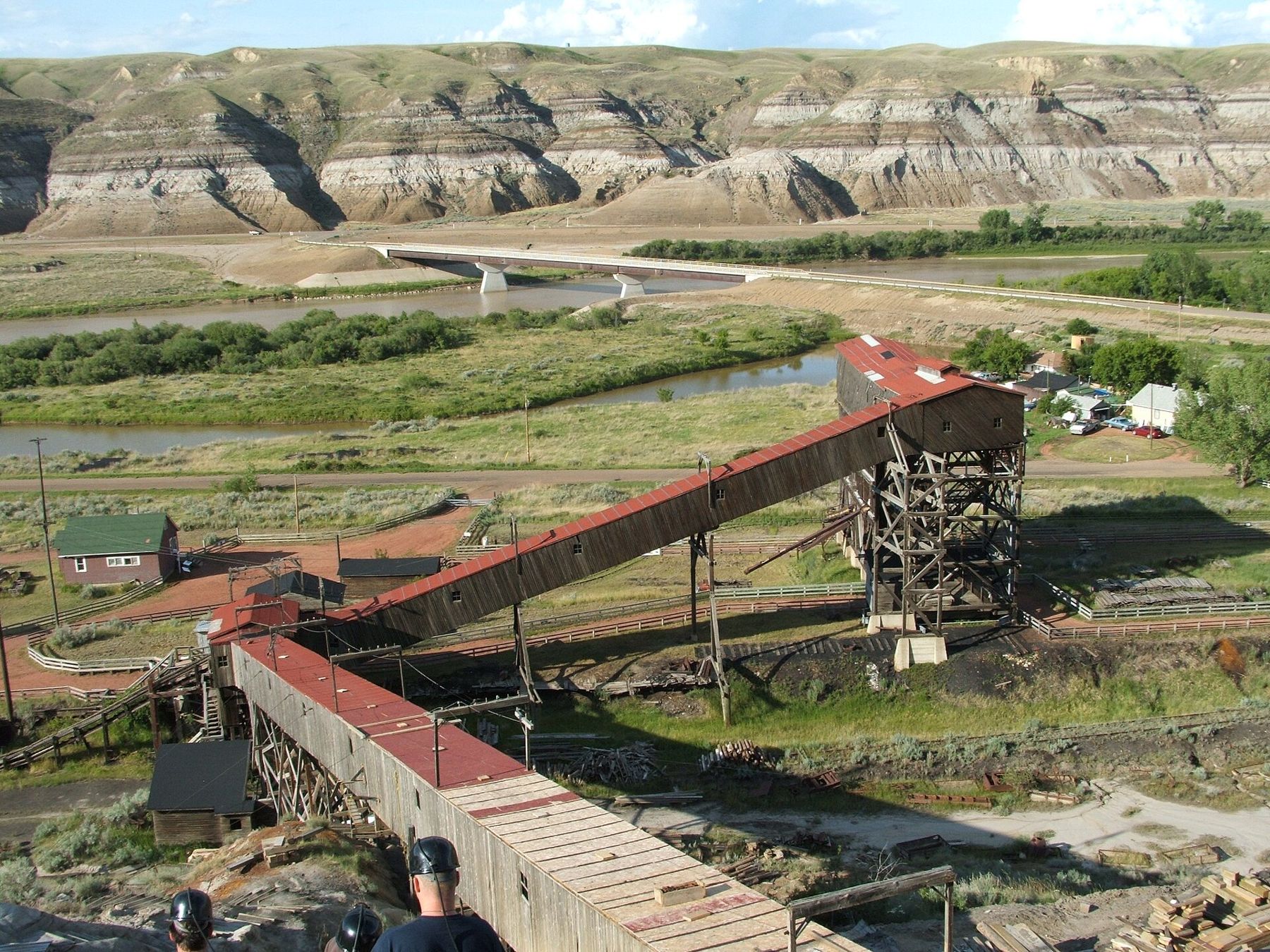
A tipple is the building where coal from underground was brought to the surface, sorted, cleaned and loaded. At Atlas, coal came out of the mine on cars and travelled up the long covered conveyor into the top of the tipple. Then gravity did most of the work. The coal fell through shaking screens that separated it by size, from large lumps for furnaces down to smaller pieces and fine dust. Workers along picking tables pulled out rock and waste by hand, often in noise and dust that made talking impossible.
Sorted coal dropped into bins and chutes inside the frame, and from there straight into rail cars waiting on the tracks below. The building is tall because each stage needed height for the coal to fall to the next. Seen from the yard, its odd shape starts to make sense: it is a machine for sorting rock by gravity, housed in timber.
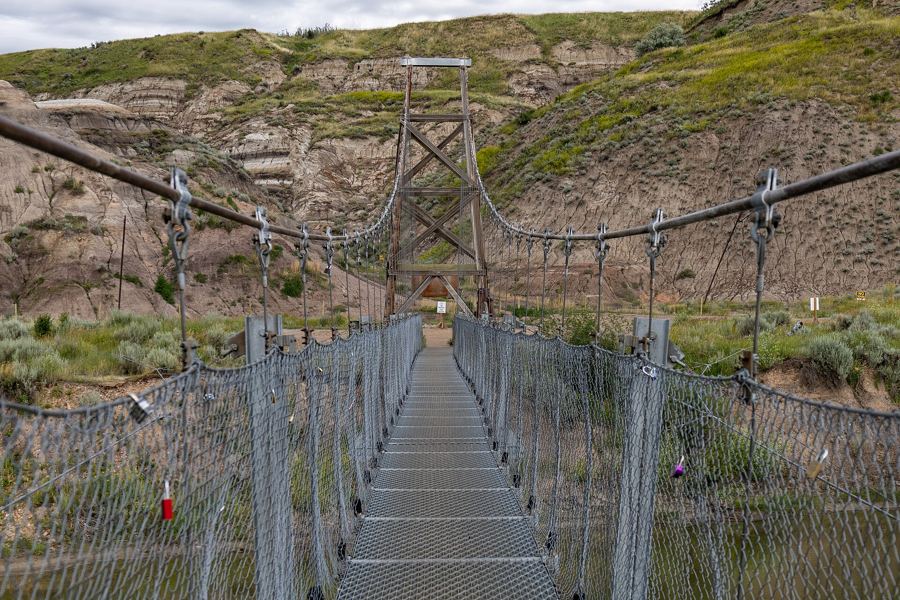 Further along the horizon · About 6 km south-eastCrossing the Star Mine suspension bridge
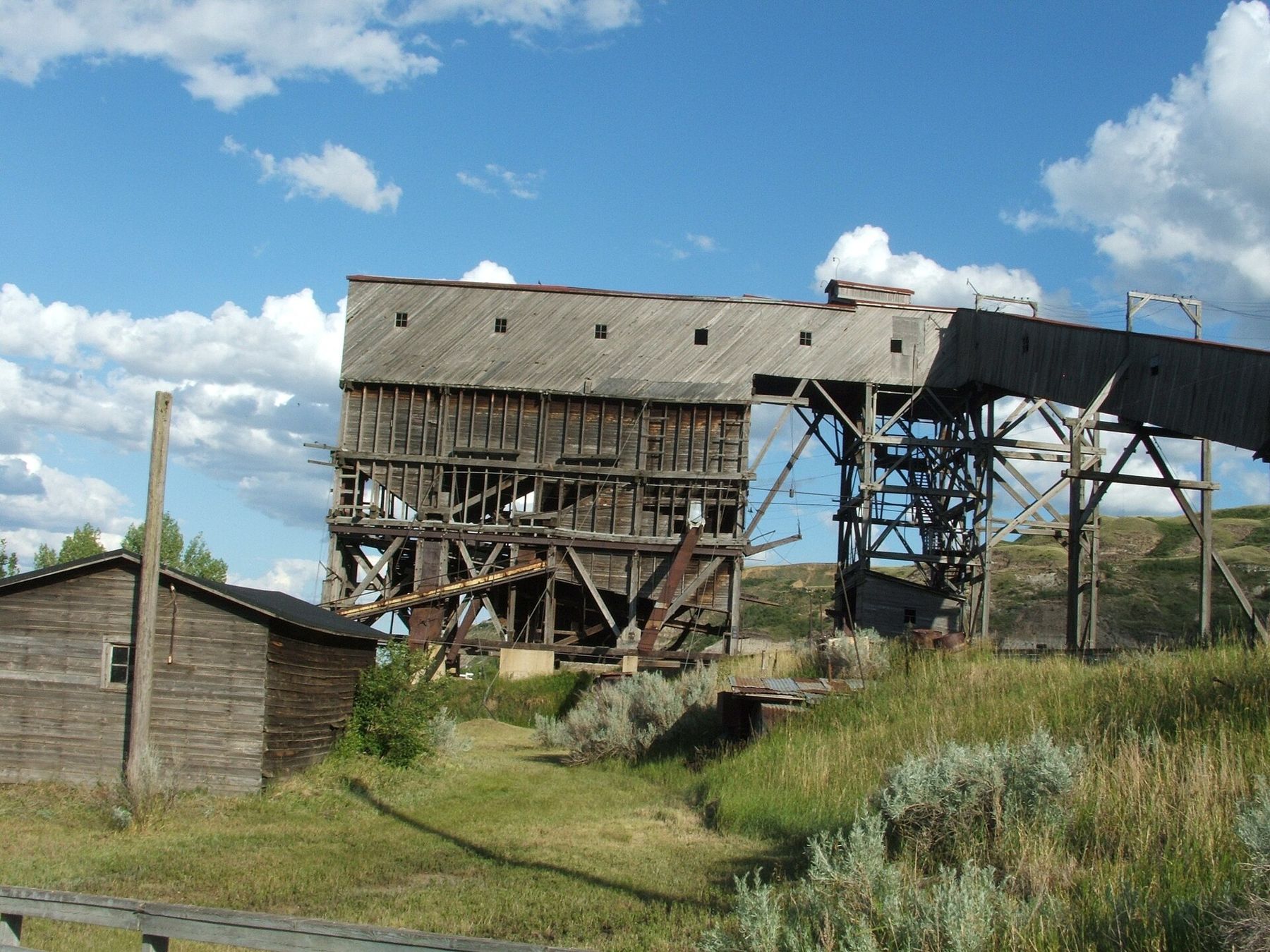
The Atlas tipple is often described as the last wooden one of its kind still standing in Canada. Timber was cheap and easy to work in the early twentieth century, but it burned and rotted, and most tipples in the West were torn down when their mines closed. This one survived because people in the valley fought to keep it, and restoration work continues.
The miners and their towns
Miners came to the valley from across Canada and from Britain, Italy, Ukraine, Hungary, the Balkans and elsewhere. They lived in company houses and camps, and towns grew around each mine: Rosedale, Wayne, East Coulee, Nacmine, Midlandvale and others, many now reduced to a few houses or nothing at all. Work underground was dangerous, with roof falls, gas and fires, and the struggle for safer conditions and fair pay led to long and bitter labour disputes in the valley.
East Coulee once had several thousand people. Today it is a quiet hamlet beside the river, with a few streets of older homes and a former school that now serves as a small museum. The people who saved Atlas are part of the same story: former miners, their families and neighbours who refused to let the valley's working history vanish.
Up the valley, the swinging bridge at Rosedale carried miners across the river to another mine, and the road to Wayne leads to a coal town that has almost emptied out.
Tours in hard hats
The site offers guided tours through the warmer months. Some stay in the mine yard and explain the buildings and machinery, others climb inside the tipple or walk a short way into the hillside where tunnels once ran. Content, schedules and age or height rules vary, and some tours fill up in summer. Expect gravel, stairs and uneven ground, and wear closed shoes.
Even without a tour, the yard is worth exploring. Old locomotives, mine cars, a lamp house, the washhouse where miners changed and the mine office are scattered across the grounds. Look for the gear that hauled cars up the slope and for the tracks that once carried full cars away down the valley.
- Allow at least two hours; more if you join a longer tour.
- Bring a jacket even in summer; tunnels and shade are cool.
- Children enjoy the site, but keep close watch on stairs and machinery.
Late light at the end of the road
East Coulee sits at the eastern end of the paved road through the valley, and the drive there is part of the visit. Stop at the hoodoos on the way out, then come to Atlas when the sun is lower and the tipple's grey boards warm to brown. From the edge of the yard you can see the whole site laid out against the hills, the river below, and the tracks of the old rail line curving away.
Summer afternoons can be very hot in the valley, and thunderstorms sometimes build over the plain. In winter the site is closed or quiet, depending on the year. Either way, the walk around the outside of the tipple and along the river gives a strong sense of the place, and of how much labour once passed through this small corner of Alberta.