DINOSAUR PROVINCIAL PARK · ABOUT 170 KM SOUTH-EAST · DINOSAURS AND FOSSILS
Planning a day in Dinosaur Provincial Park
A long drive south-east from Drumheller ends at the rim of a deep river valley full of grey hills. Most of it is protected and reached only with a guide; here is how to use the rest well.
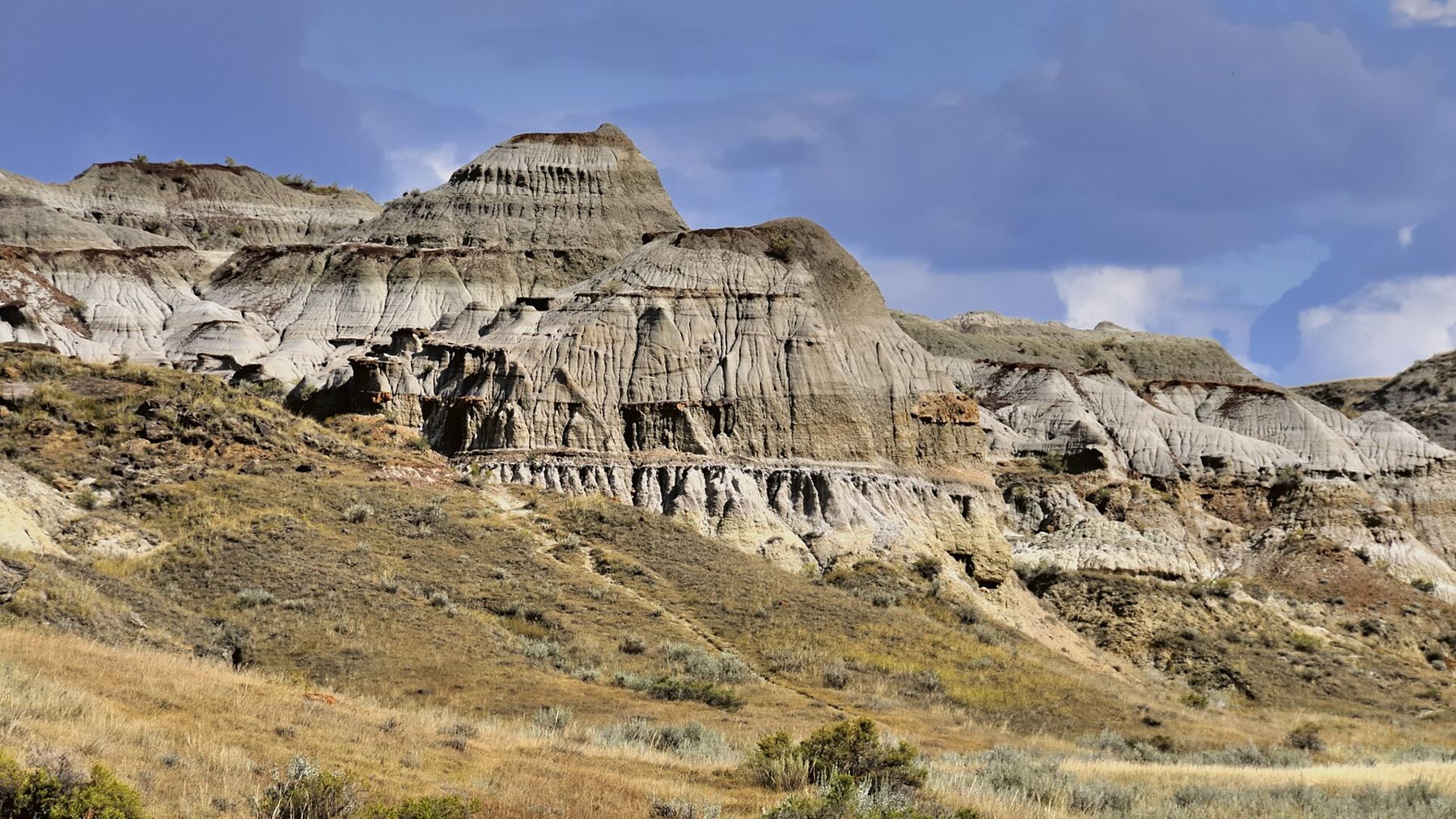
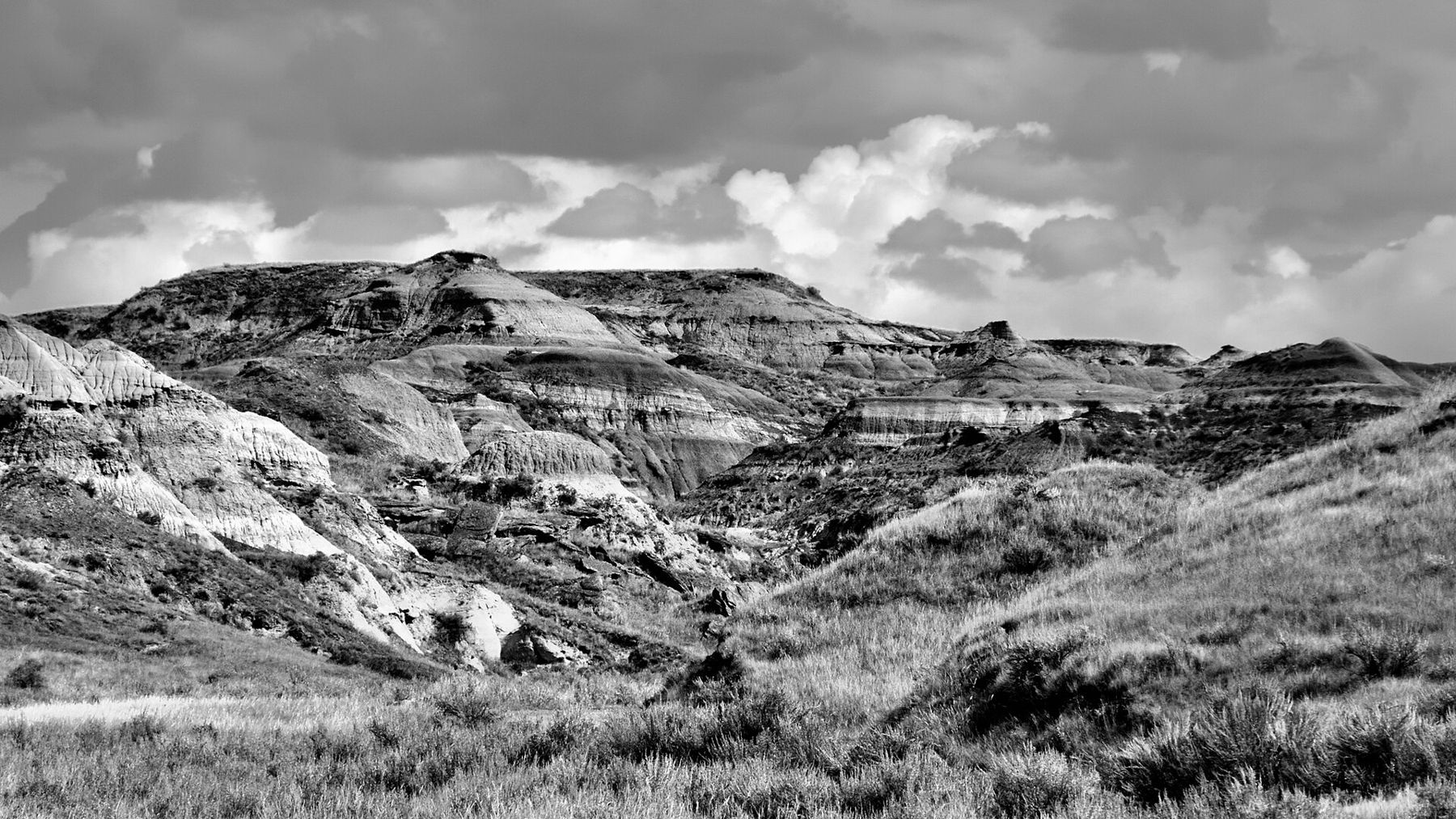
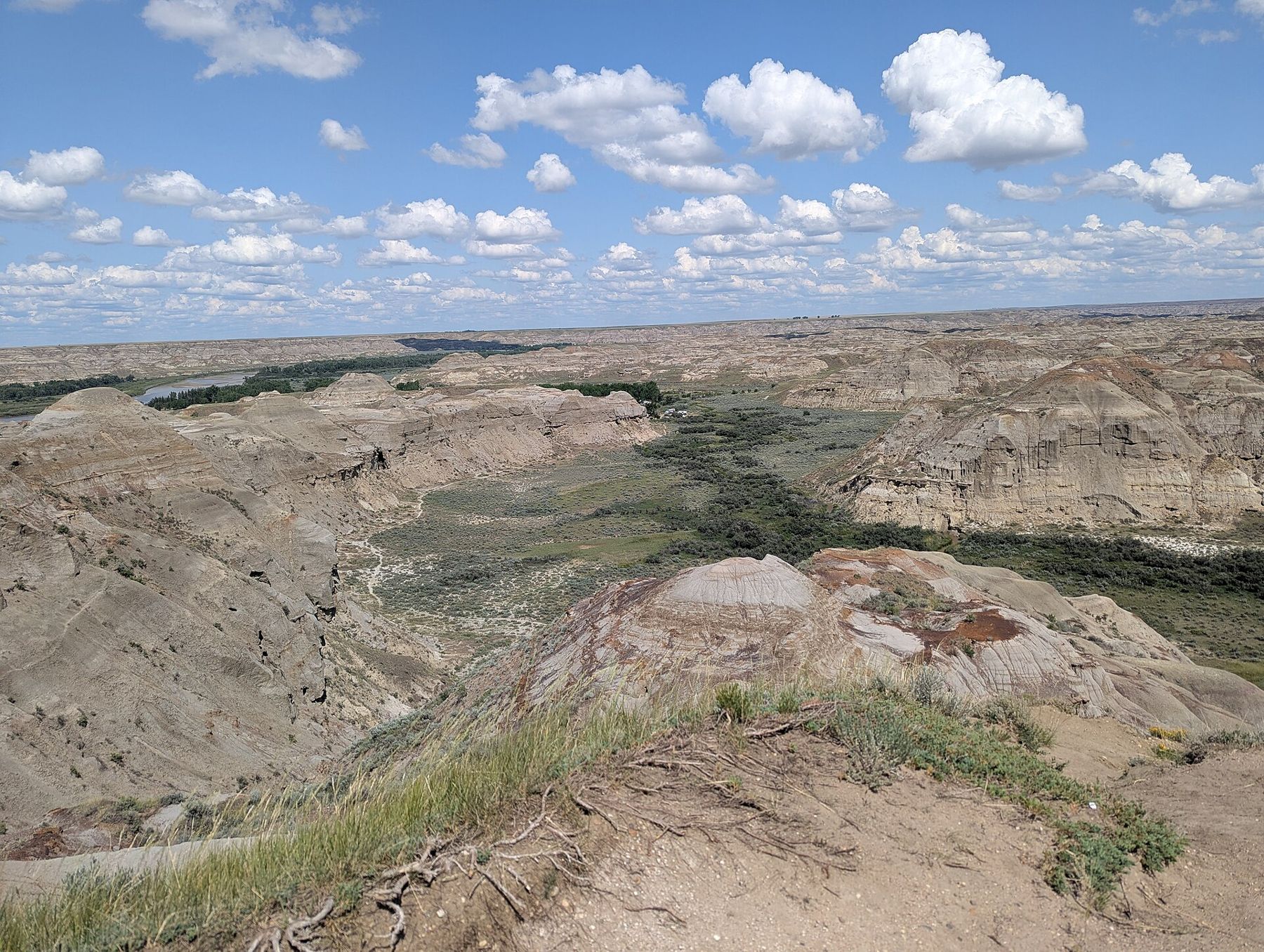
The approach is flat for a long time. Fields and pasture run to the horizon, a few grain bins and farmyards break the line, and the sky takes up most of the view. Then the road reaches the rim, and the ground falls away into a valley of bare grey and buff hills, with the green ribbon of the Red Deer River winding through the bottom. Dinosaur Provincial Park is one of the richest places in the world for fossils from the late age of dinosaurs, and it was named a UNESCO World Heritage Site in 1979.
The park lies within Treaty 7 lands, in country long known to the nations of the Blackfoot Confederacy, and the valley carries a much longer human story than the fossil digs of the past century. Sites of earlier peoples are protected here as carefully as the bones.
Why these hills hold so many bones
About 75 million years ago, this part of Alberta was a warm coastal plain cut by rivers flowing east toward an inland sea. Animals died along the river channels, and floods buried their bones in sand and mud. Over time, those sediments hardened into the soft rock now called the Dinosaur Park Formation. When glaciers melted at the end of the last ice age, torrents of meltwater cut down through the plain, and the Red Deer River has kept working at the valley ever since. Rain and frost now strip the soft slopes back a little each year, and fresh bone keeps appearing at the surface.
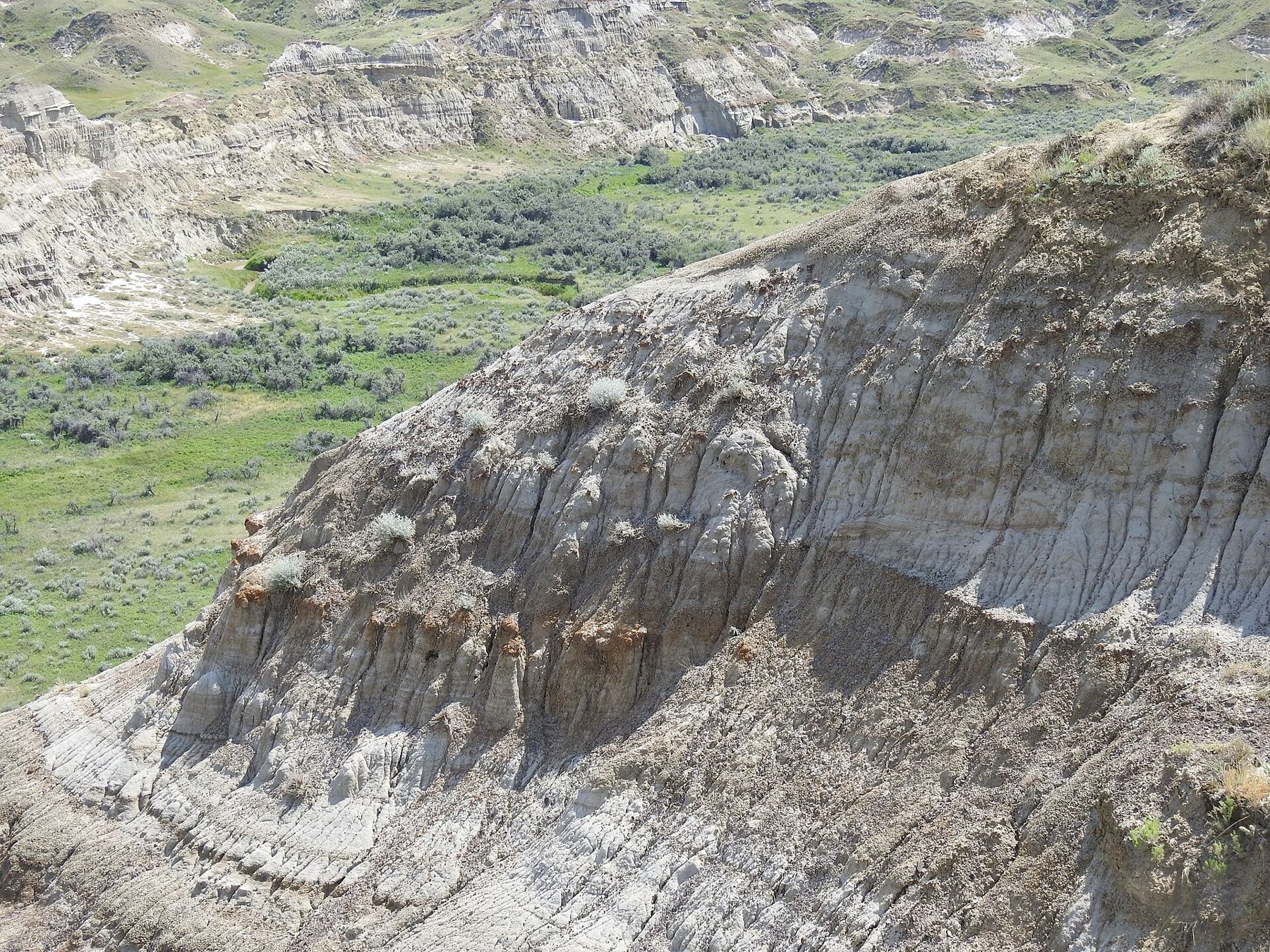
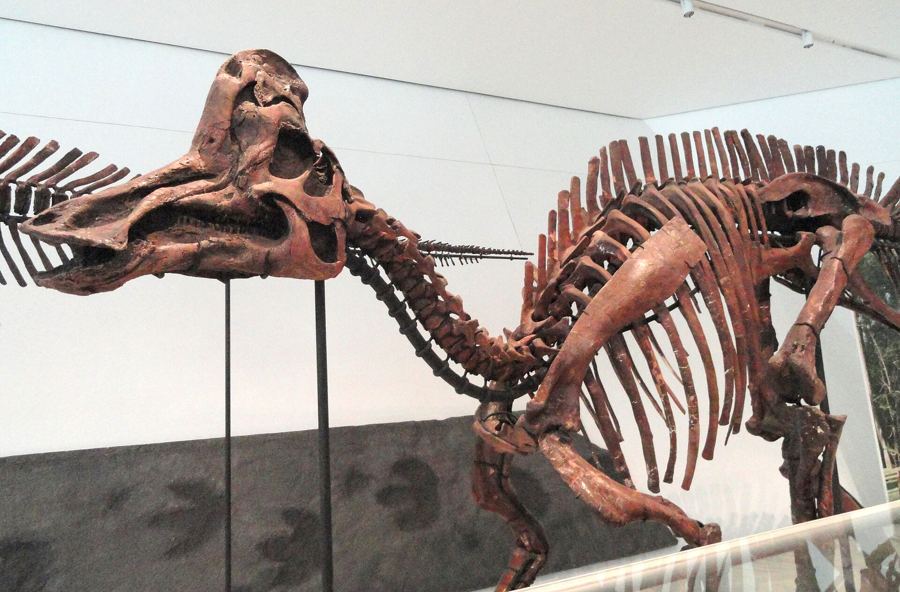
Scientists have identified dozens of dinosaur species from the park, along with turtles, crocodile relatives, fish, small mammals and plants. Many skeletons now standing in museums around the world were collected here, and research continues every summer. The scale of the place is hard to grasp from the rim: the protected area stretches well beyond what you can see, along both sides of the river.
The loop road and the open trails
A short public loop road winds through part of the badlands near the campground and visitor centre, with pull-outs and small shelters where fossils have been left in place under cover, so you can see bones as they lie in the rock. Drive it slowly, stop often, and get out at each viewpoint.
Several short trails are open to everyone without a guide. They range from easy walks on the valley floor among cottonwoods near the river, to climbs onto the badlands themselves, where the path crosses bare clay and sandstone between hoodoos and ridges. Distances are modest, but the ground is uneven and there is little shade.
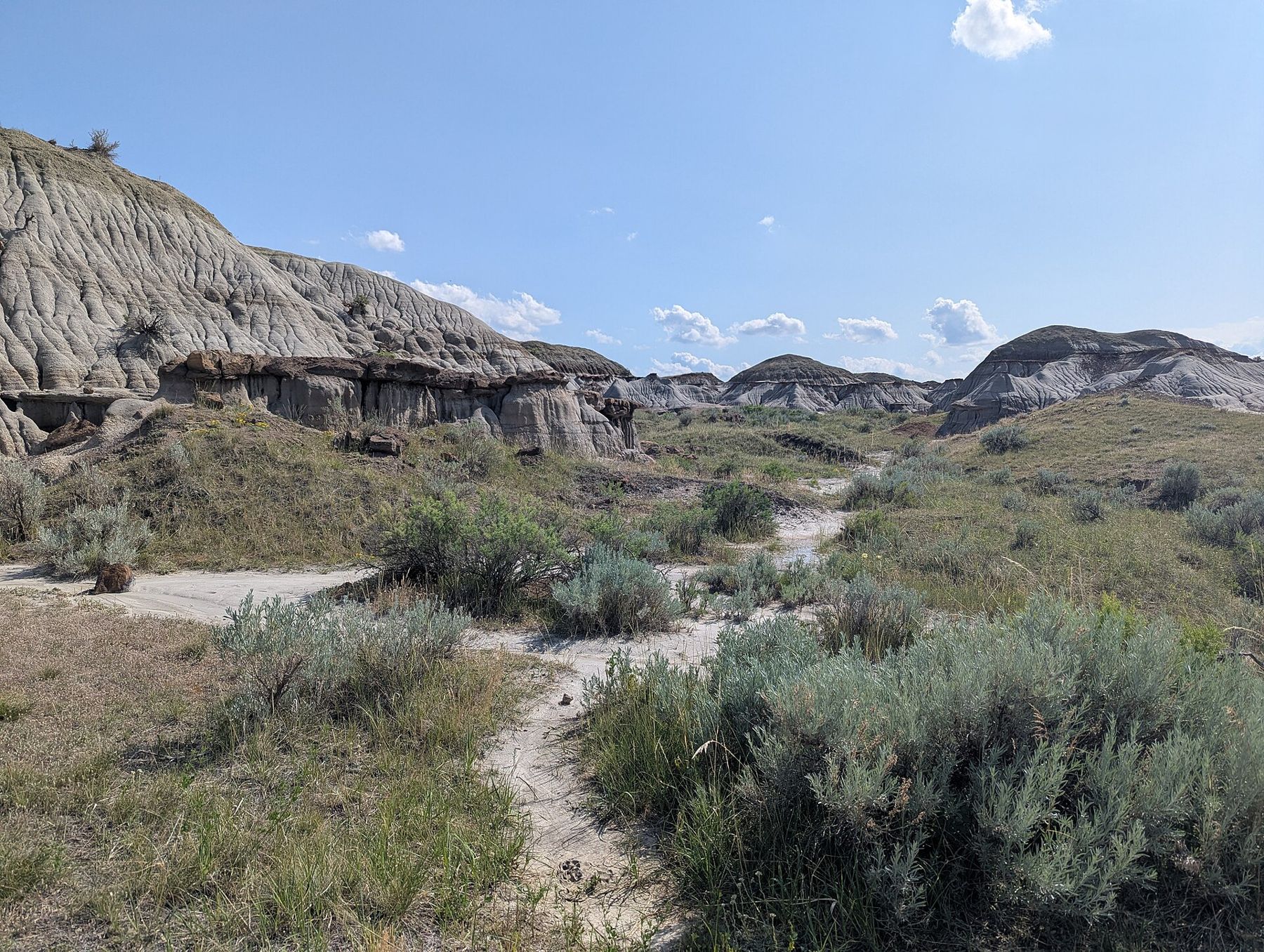
The views from the higher trails take in the whole valley: grey domes and buttes in every direction, the river glinting through the trees, and the flat prairie line above. Signs along the way explain what you are looking at, and the visitor centre has displays that help you read the landscape before you head out.
 Further along the horizon · Across the whole valleyFossils: look, photograph, leave them
The natural preserve: guided walks only
Much of the park is a natural preserve, closed to independent visitors to protect the fossils and the fragile ground. You can enter it only on guided programmes and bus tours run by the park. These vary from short interpretive walks to longer hikes into the deeper badlands, and some programmes let you see active or past quarry sites. They are the best way to understand what makes the park special, because the guides can show you things you would walk past alone.
Programmes run mostly in the warmer months, and spaces are limited. If you can book only one thing, choose a guided walk into the preserve.
Bones belong where they lie
In Alberta, fossils belong to the province. In a protected place like this one, you may look at and photograph anything you see, but you may not dig, collect or move fossils, rocks or artefacts. That includes small fragments that seem to be everywhere on some slopes. Each piece carries information about where it came from, and moving it destroys that record. If you notice something that looks significant, leave it, note where you saw it and tell park staff.
The same care applies to the ground itself. Badlands clay erodes fast, and footprints and shortcuts leave scars that rain turns into gullies. Stay on marked trails unless a guide is leading you elsewhere. For the rules in more detail, and for the reasons behind them, see look, photograph, leave them.
Rain and frost now strip the soft slopes back a little each year, and fresh bone keeps appearing at the surface.
Heat, water and the river
The valley floor is sheltered from the wind and can be much hotter than the plain above. On summer afternoons the pale clay reflects light and heat, and there is almost no shade on the badlands trails. Heat exhaustion is a real risk, and help can be some distance away.
- Watch where you step and where you put your hands; prairie rattlesnakes live in the park, along with cactus that hides in the grass.
- After rain, the clay turns slick and sticky, and some trails become unsafe. Wait for it to dry.
- Thunderstorms can build quickly over the plain. Get off exposed ridges if one approaches.
- Mobile coverage can be patchy in the valley; tell someone your plans.
The Red Deer River runs past the campground and the main public area, with cottonwood groves on its banks that give the only real shade. The current is stronger than it looks and the banks can be soft; enjoy it from the trails rather than the water. In the evening, mule deer and birds come down to the river corridor, and the light on the hills changes by the minute.
A day that starts early
From Drumheller, the drive takes a couple of hours across open country, and the last stretch follows quiet farm roads north of Brooks. Leave early. A good day might start with a guided programme in the cool of the morning, continue with the loop road and a short trail, then a long break in the shade, and finish with a walk on the badlands as the sun drops. Staying overnight in or near the park lets you see the valley at both ends of the day, which is when it looks its best.
On the way, the Brooks Aqueduct makes a good stop. Opening dates, services and road conditions vary by season, and some facilities close in winter. The park is open in the colder months, but programmes are few, the wind can be bitter, and the valley is quiet in a way that suits some visitors very well.