ALBERTA PRAIRIE · ABOUT 80 KM EAST, AROUND HANNA · COAL, GRAIN AND RAIL
Reading a grain elevator from the road
For most of a century, a tall wooden elevator beside a rail siding marked every farm town on the plain. Few are left. Here is how they worked, and how to read the ones that remain.
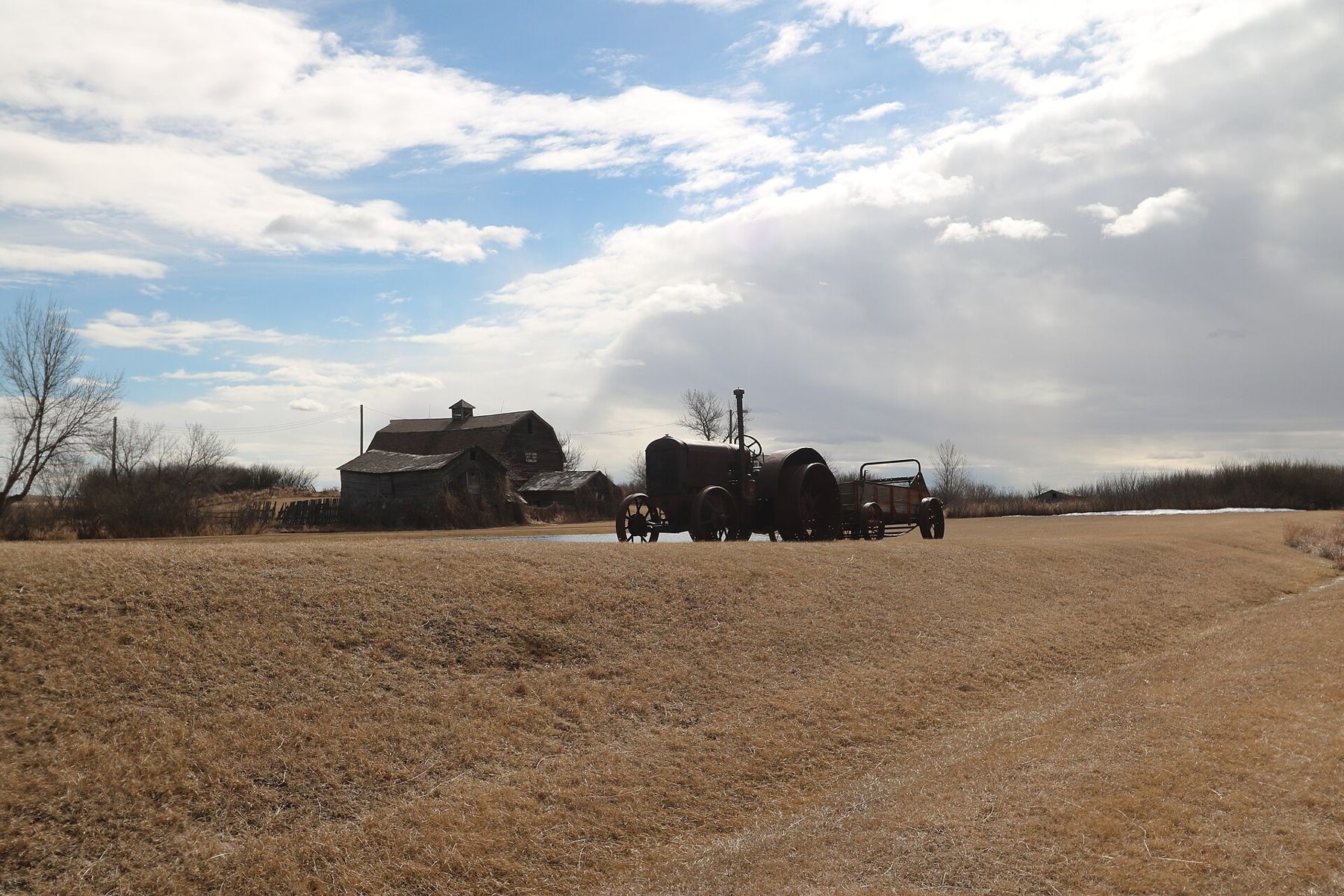
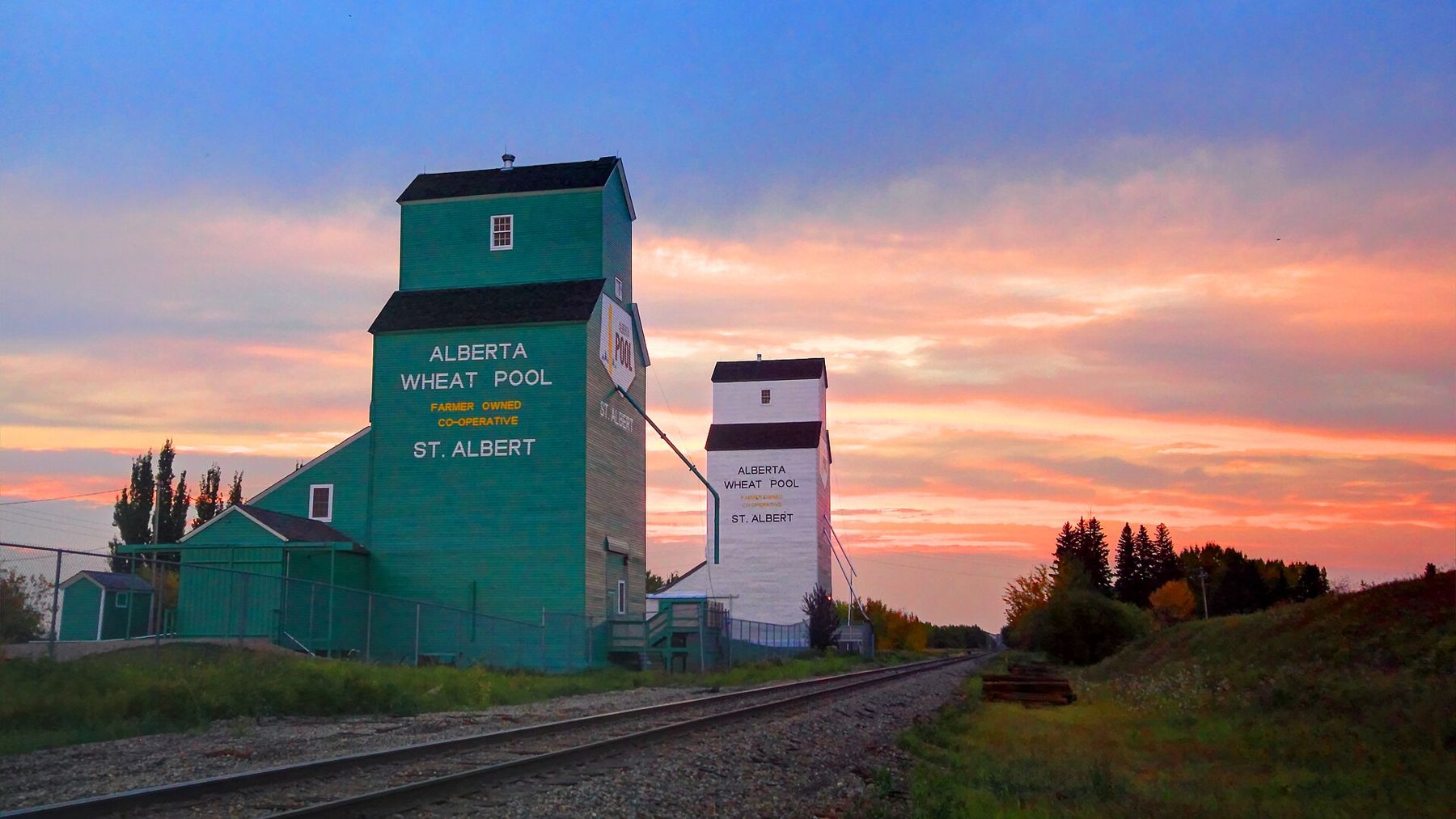
Drive east from the Drumheller valley onto the plain and the land opens out. Fields run to the horizon in long rectangles, the sky fills most of the windshield, and the road runs straight for kilometres at a time. For most of the twentieth century, the first thing you saw of any town out here was its grain elevator: a tall, narrow wooden tower beside the railway, visible long before the houses, the church or the school. Prairie people called them sentinels, and they gave the plain its skyline.
Most of those elevators are gone now. The few that remain are worth understanding, because each one is a machine, a piece of rural history and a landmark in a landscape with few of them.
A machine for moving grain by gravity
A classic wooden country elevator is simpler than it looks. At the base is the driveway, a covered passage at one end where a farmer brought a load of grain. The wagon or truck was weighed on a scale, then the grain was tipped into a pit below the floor. From the pit, a continuous belt fitted with small buckets, known as the leg, carried it straight up through the middle of the building to the head at the very top.
Up there, a distributor directed the grain into one of many tall bins that filled the body of the elevator, keeping different grades and crops apart. When a rail car was spotted on the siding outside, the process ran in reverse: grain flowed down out of the bins, back up the leg, and through a long spout into the waiting car. Gravity did most of the work, which is why the elevators were so tall.
The walls were often built of planks laid flat and nailed one on top of another, a method that made them thick and very strong against the outward push of tonnes of grain. A small office stood beside the elevator, where the agent graded, weighed and paid, and a lower annex was often added later for extra storage. Once you know the parts, you can read them from the road: the driveway shed, the tall bin section, the small house on top, the spout swinging out toward the track.
A siding every few miles
Elevators were built along the railway, and the railways were built to reach the grain. As branch lines pushed across the plain in the early twentieth century, the companies laid out sidings at regular intervals, often around ten to fifteen kilometres apart. The spacing was not an accident. A farmer hauling grain by horse and wagon could make the round trip to the nearest siding in a day, and towns grew up at each one: an elevator or several, a station, a store, a few houses.
Across Alberta, well over a thousand country elevators stood at the peak, operated by grain companies, farmer-owned co-operatives and independent owners. A busy siding might have a row of three or four, each painted in its company's colours, lined up beside the track. On the plain around Hanna and through the Special Areas to the east, the same pattern repeated town after town.
Prairie people called them sentinels, and they gave the plain its skyline.
Why the sentinels came down
The decline was gradual, then fast. Trucks replaced horses, and farmers could haul grain much further. Grain companies merged and closed smaller points. From the later decades of the twentieth century, branch lines were abandoned one after another, and changes to the way grain transport was paid for made short lines and small elevators even harder to justify. Large concrete terminals, able to load long trains quickly, took over the work of dozens of wooden elevators.
Without a railway, an elevator has no purpose. Many were demolished; some burned; some were moved onto farms for private storage. Towns that had grown up around them shrank, and some disappeared. In the Special Areas, created in the 1930s after drought and hard times drove many families off the land, the loss of the elevators came on top of a long thinning of the rural population. Hanna, the largest town in the area, is home to the board that manages the Special Areas.
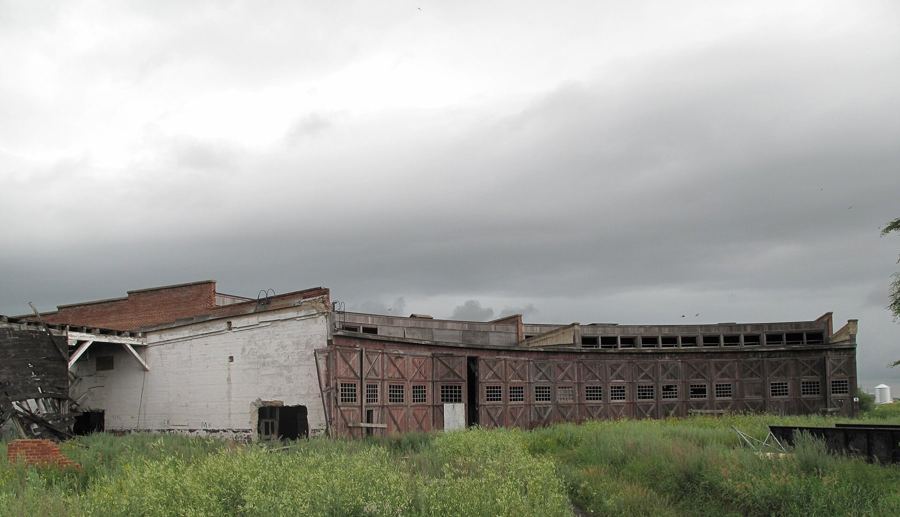 Further along the horizon · About 80 km eastHanna and the old railway line
Finding the survivors around Hanna
The elevators that remain fall into a few groups. Some are still in private use for storage, standing beside a vanished track. Some are slowly falling apart, their paint gone and their roofs open to the sky. And a few have been restored by local groups and kept as landmarks or small museums.
Rowley, a hamlet north of Drumheller, is one of the best places to see old elevators beside a preserved stretch of track, along with false-fronted buildings and old rail cars. On quiet days it feels almost deserted; at times it hosts community events that bring crowds. Elsewhere, the best approach is simply to drive. Head east from Hanna, or along the secondary roads north and south of Highway 9, and watch the horizon. A tall shape above the fields, too narrow for a barn, is usually an elevator, and a line of old poles or a raised grade nearby shows where the track once ran.
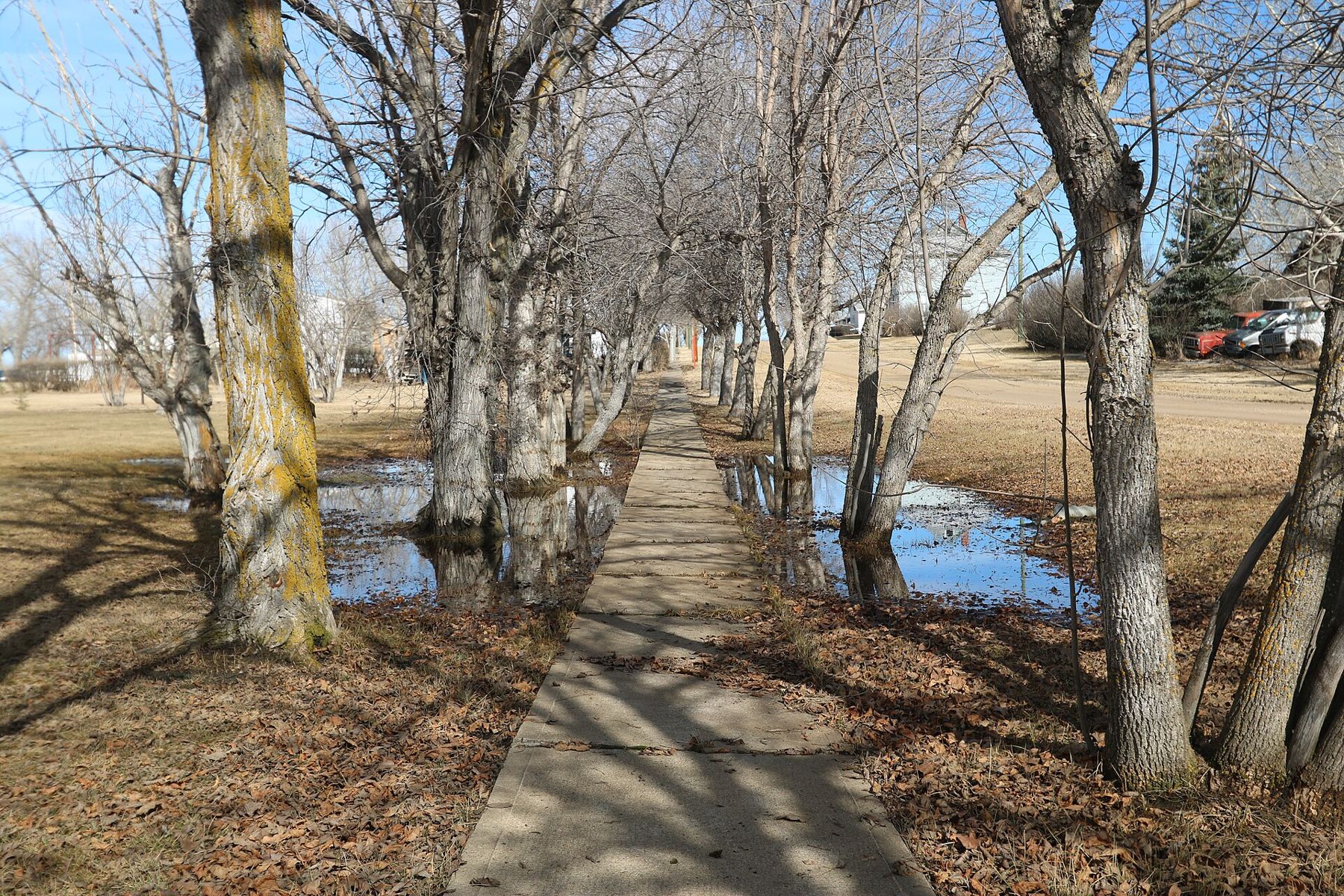
The drive along Highway 9 between Hanna and Drumheller passes grain country all the way, and the railway story continues at Hanna's old roundhouse.
Photographing from public roads
An elevator on the plain is one of the classic subjects of prairie photography, and it rewards patience with the light. A few habits help, and some matter for safety and respect:
- Stay on public roads and road allowances. Elevators, yards and old sidings are private property, and the buildings themselves are unsafe to enter.
- Pull fully off the road, well clear of traffic, and watch for trucks and farm machinery, which move faster and wider than you expect.
- Treat any rail line as active. Never stand on the track.
- Shoot at either end of the day, when low light brings out the texture of weathered boards and the shadow side goes deep blue.
- Step back. An elevator makes sense in its setting: wide fields, a line of poles, a big sky and nothing else for kilometres.
The plain under a long sky
The plain is weather country. In summer, thunderstorms build in the afternoon, and you can watch a storm cell approach for an hour before it arrives, with an elevator lit by sun against a black sky. Hail can flatten a crop in minutes, and when it does, the farmers on these roads lose a year's work. In winter, snow drifts across the roads and the elevators stand out sharply against white fields. Spring and autumn bring the best driving, with long light, cool air and the colours of new growth or harvest stubble.
Whatever the season, carry water, fuel up when you can, and remember that services are far apart. The reward is a slow day on empty roads, reading the history of the plain one tall wooden tower at a time.