HANNA · ABOUT 80 KM EAST · COAL, GRAIN AND RAIL
Hanna and the old railway line
A town that the railway put on the map, and a brick roundhouse that still stands at its edge. Hanna is where the Badlands story begins, on the flat land above the valley.
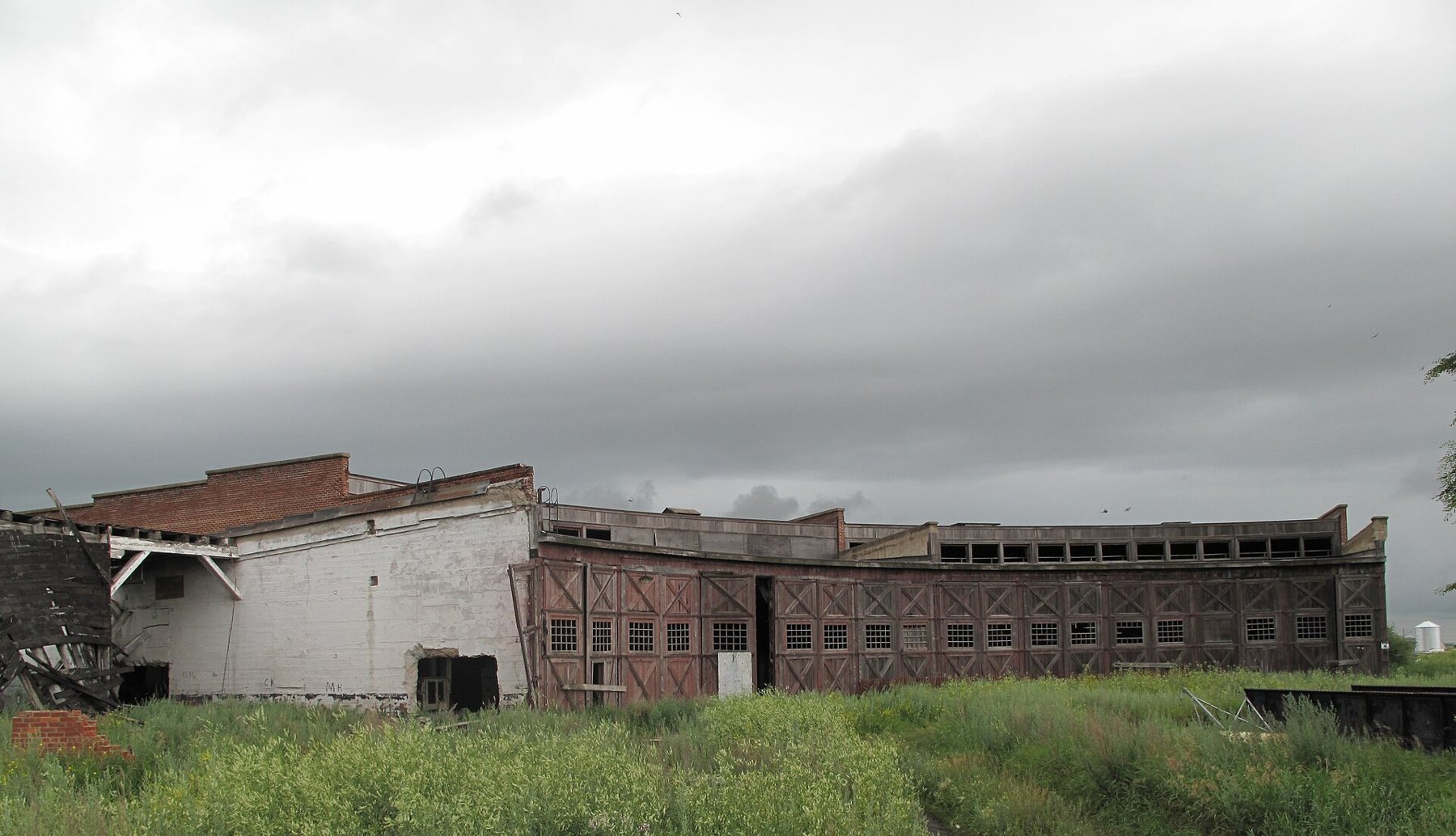
Most travellers reach the Badlands from Calgary and never go further east than Drumheller. Keep driving along Highway 9 and the valley falls behind; the land flattens into wheat and grass, and after an hour or so a town appears on the plain. Hanna is not a badlands town at all. It is a prairie railway town, and its story explains a great deal about the whole region, from the grain elevators on the plain to the coal mines in the valley below.
A town made by the railway
Hanna was founded in the early twentieth century, when the Canadian Northern Railway pushed its line west across the plains. Railways needed places along the line where crews changed and engines were serviced, and Hanna became one of those division points. The town took its name from a senior railway official of the day, as many prairie towns did. Streets were laid out beside the tracks, businesses opened to serve the crews and the farmers who were arriving to take up land, and within a few years a substantial town stood where there had been open grass.
The railway later became part of Canadian National, and for decades it was the heart of Hanna's working life. Trains carried grain out from the elevators on the surrounding plain and brought supplies in. The coal of the Drumheller valley, too, moved along these lines.
A division point also meant people. Engineers, firemen, section crews, shop workers and their families filled the town's houses, and the railway's schedule set the rhythm of daily life. When the steam era ended and crew changes were reorganised, many of those jobs moved elsewhere. The town adapted, as prairie towns have had to, leaning on farming, ranching, energy and its role as a service centre for a wide, thinly settled district.
The roundhouse
The clearest relic of that era is the roundhouse at the edge of town. A roundhouse is a curved building with stalls for locomotives, arranged around a turntable that turned engines and directed them into the stalls for servicing. In the steam age, every division point needed one: locomotives required constant attention, from fire cleaning to repairs.

Hanna's roundhouse is built of brick, with a long curved wall of tall doorways. When steam gave way to diesel locomotives, which needed far less servicing, roundhouses across the prairies fell out of use, and most were demolished. Hanna's survived, weathered and partly ruined, and local people have worked to stabilise and protect it. Its condition and any public access change over time, so view it from public ground and respect any fencing or signs.
Even from outside, the building tells its story. Count the doorways and you count the engines that could be serviced at once. Look at the curve of the wall and imagine the turntable at its centre, swinging a locomotive round to face its stall. The size of the structure, out here on the open plain, shows how much the railway expected of this place in its early years.
 Further along the horizon · From 80 km east to townFrom Hanna to the rim on Highway 9
Reading the town
Walk Hanna's main streets and you can still read the railway pattern. The commercial blocks face the line, the oldest buildings cluster near where the station stood, and the residential streets spread out on the grid behind. Brick and wood false-fronted buildings from the early decades stand beside newer ones. The town's museum and pioneer village, a collection of old buildings gathered from the district, tells the settlement story in more detail.
Hanna is also the seat of the Special Areas Board, which manages a large block of dry country around the town. The Special Areas were created in the 1930s after drought and economic collapse drove many farm families off the land. Their story is a reminder that this plain has been hard to farm, and that the communities here have had to adapt again and again.
The land around the town is a mix of cropland and native grassland. Some of that grassland has never been ploughed, and it supports birds and plants that have vanished from much of the prairie: hawks hunting over the grass, pronghorn in the distance, and in spring the calls of birds that nest on the ground. A slow drive on the gravel roads around Hanna, with binoculars, is a quiet pleasure few visitors try.
Grain on the plain
Out of town, the plain stretches away in every direction, farmed and grazed. Elevators once stood at every siding along the lines that radiated from places like Hanna, and a few still survive in the district. Reading a grain elevator from the road explains how they worked and why so many have gone.
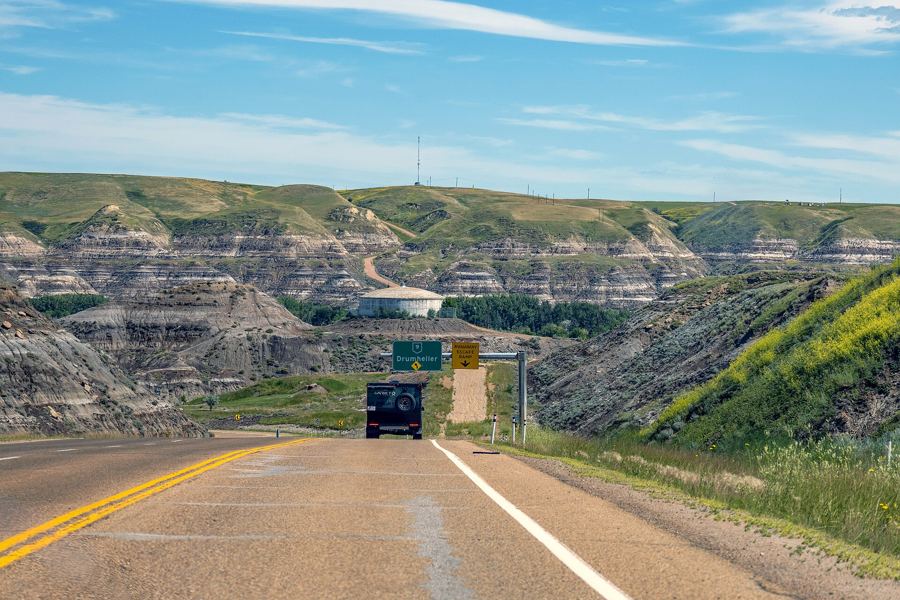
For the view of how this plain meets the valley, drive west on Highway 9 towards Drumheller. For the long, empty run south, take Highway 36 towards Brooks and the Brooks Aqueduct.
A stop worth making
Hanna is a working town, not a tourist town, and that is its appeal. It has fuel, food and services that are scarce on the roads around it, and it makes a sensible base for exploring the eastern edge of the Badlands. Allow an hour or two to walk the streets, look at the roundhouse from public ground and drive out onto the plain. Then turn west and watch the land change.