ROSEBUD · ABOUT 35 KM SOUTH-WEST · HOODOOS AND COULEES
Rosebud on a quiet weekday
A handful of streets at the bottom of a green coulee, a river, an old rail line and a theatre tradition far bigger than the place. On a weekday you can hear the river.
Most of the Canadian Badlands is about edges: the moment the wheat fields stop and the ground falls away. Rosebud is what lives at the bottom of one of those drops. The hamlet sits in a narrow valley cut by the Rosebud River, south-west of Drumheller, with grassy coulee walls rising on both sides and the prairie carrying on, unseen, just above. It is small enough to walk end to end in a few minutes, and on a weekday outside the busy season it can feel almost empty.
That quiet is the reason to come. Rosebud is not a sight in the way the hoodoos or the museum are. It is a place to slow down, look at how a prairie settlement fitted itself into the folds of the land, and walk by a small river that most visitors only meet downstream.
A town in the fold of the land
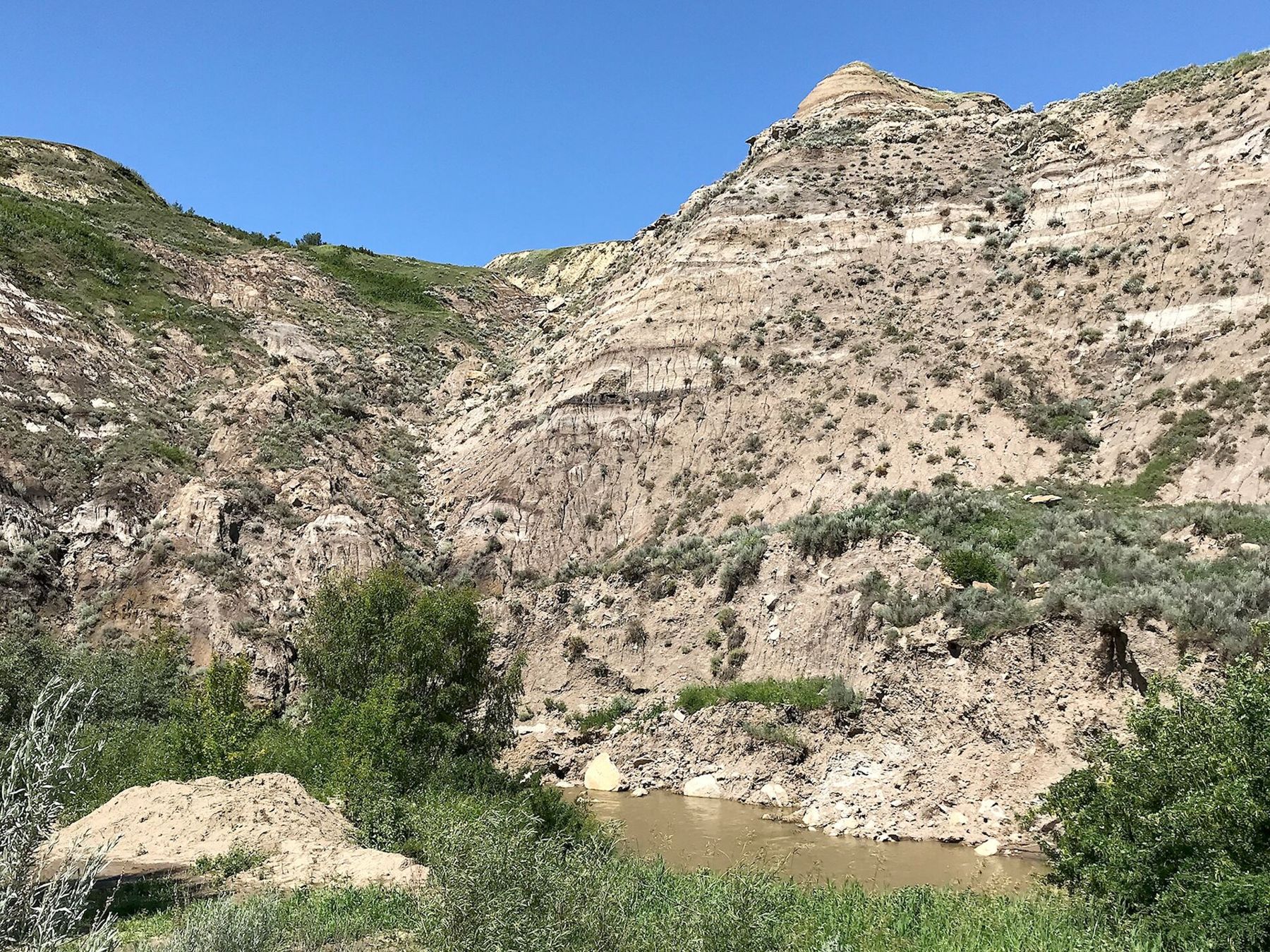
The valley gives Rosebud its shape. Streets run along the flat ground beside the river, and the coulee sides climb steeply behind the last houses. In spring and early summer the slopes are green and soft; by late summer they fade to straw and grey, and the bands of rock beneath the grass begin to show. It is badlands country in its gentler form: the same layered sediments as the Drumheller valley, but mostly still covered by grass.
From the rim road on the way in, you look down on the whole hamlet at once. It is worth stopping at a safe pull-off to see it that way before you drive down: the river line, the roofs among the trees, the old railway grade along the valley floor.
Grain, rails and the line along the valley
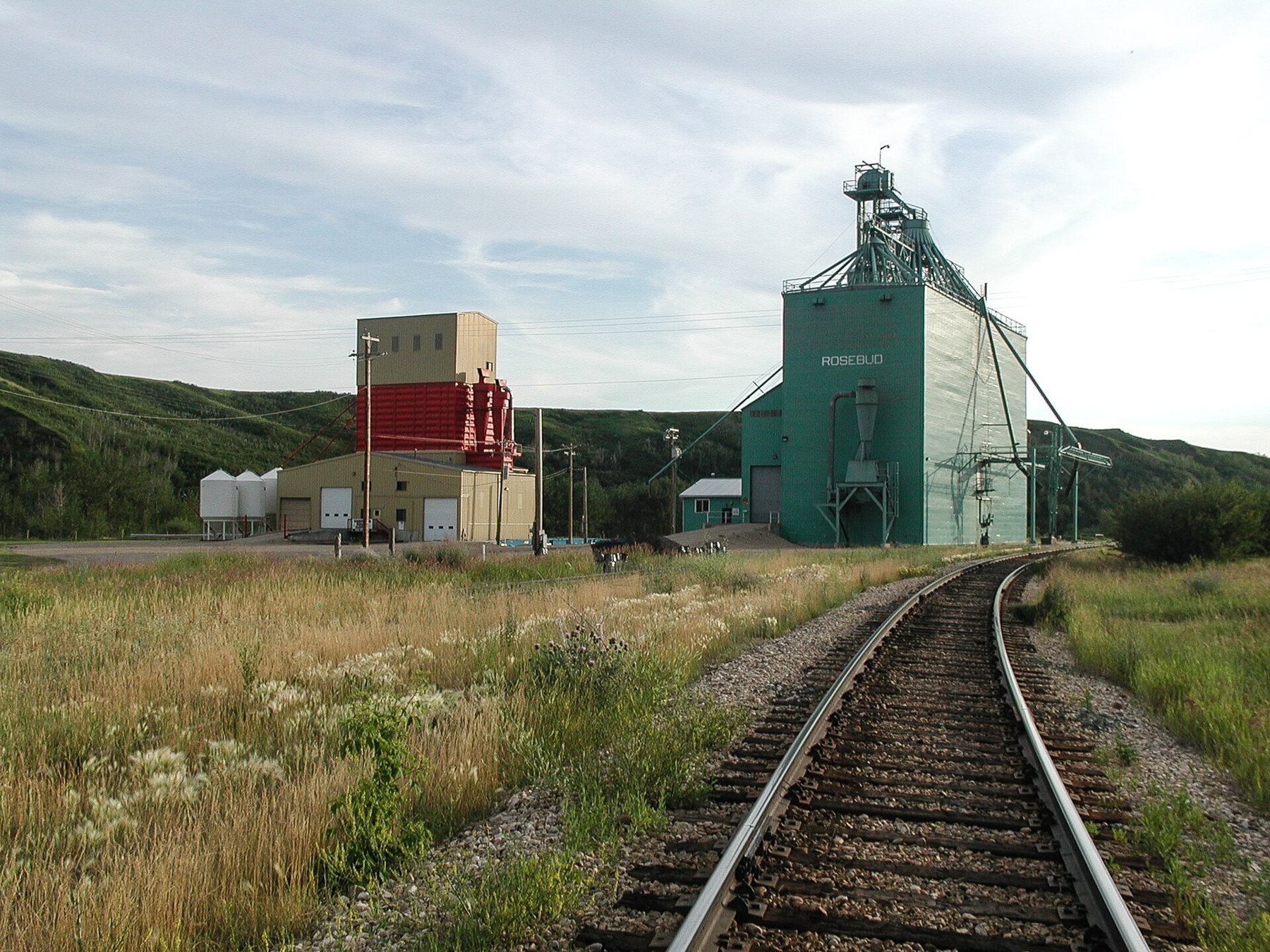
Like so many prairie places, Rosebud owes its form to the railway. A line ran along the valley, and grain elevators stood beside it, filled from the farms on the benchland above. In the early 2000s two of them still rose beside the track here, painted in the colours of the companies that ran them. Across Alberta, most elevators of that kind have since been taken down, and the ones that survive are watched closely by people who care about them.
If you are curious about how those buildings worked, and why they stood every few kilometres along the line, reading a grain elevator from the road explains what to look for. Here, simply notice how the rail line hugs the valley floor: the railway engineers, like the river, took the easiest gradient they could find.
The stage in the coulee
Rosebud's name is known far beyond the valley for one thing: theatre. For decades a professional theatre and a school for actors have worked here, drawing audiences out from Calgary and beyond for plays and dinner performances in a hamlet with only a few hundred residents. It is an unusual sight on the prairie: rehearsal spaces, costume workshops and audiences arriving by car and coach to a place this small.
Performance seasons, days and ticketing change from year to year. On a non-performance weekday the town shows its everyday face, which is the one this page is about.
 Further along the horizon · About 15 km south-eastEleven bridges to Wayne
Walking by the Rosebud River
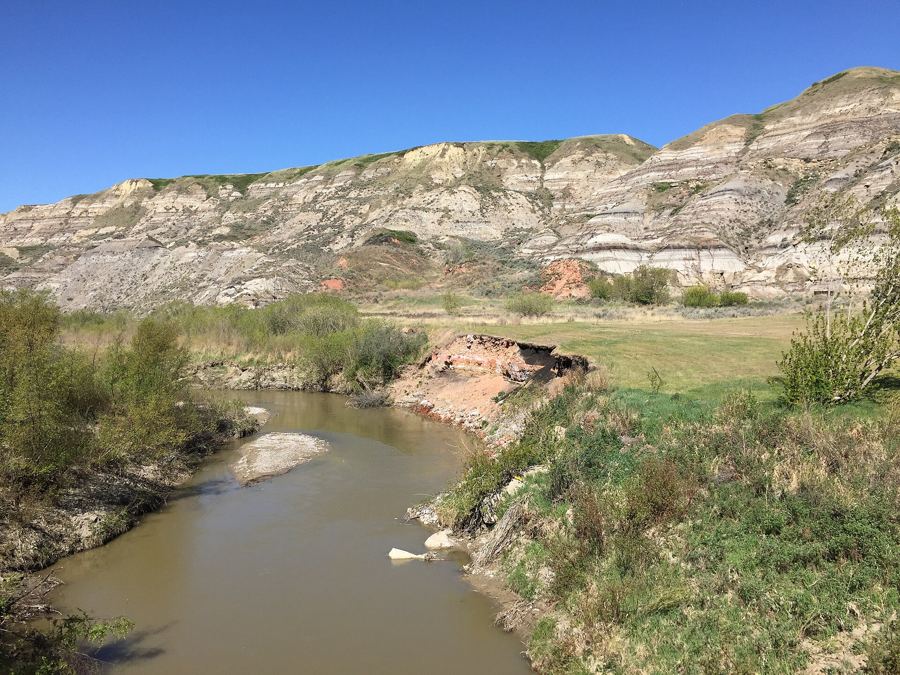
The Rosebud River is a modest stream, but it has done a great deal of work. Over thousands of years it has cut this valley and, further downstream, carved the bare badlands around Wayne before joining the Red Deer River near Rosedale. In Rosebud it runs quietly between willow and cottonwood, and a short walk along it is the simplest pleasure the hamlet offers.
Stay on public paths and road edges, close any gates you pass through, and remember that much of the land around the valley is private ranch and farm land. In spring the river can run high and brown with meltwater; in late summer it may be low and slow. Either way, it is not a swimming river.
Weekday or weekend
On summer weekends and performance days, Rosebud fills up. Parking along the narrow streets gets tight, and the valley carries the sound of visitors. Midweek, especially in May, June and September, the hamlet returns to its own pace. Mornings are best: cool air sits in the coulee, birds work along the river, and the low sun lights the eastern slopes.
There are few services here, and opening hours of anything that is open vary with the season. Bring water and a picnic, and fill the fuel tank before you leave the highway.
Fitting Rosebud into a day
Rosebud makes a natural first or last stop on a day in the Badlands. From Calgary, the road to Drumheller passes not far away, so a detour down Highway 840 adds an hour or so of driving and walking. From Drumheller, combine it with Horseshoe Canyon, which lies on Highway 9 between the two, for a morning that moves from a raw badland canyon to a green, lived-in valley.
If you have more time, follow the river's story downstream: the bridges of Highway 10X near Wayne, then the swinging footbridge at Rosedale where the Rosebud's water joins the Red Deer. Together they show the same valley at three stages, from farmed coulee to bare clay to the wide river at the bottom.
Respecting a very small place
Rosebud is home to people who live and work here all year. Drive slowly, park where parking is marked, keep voices down in the evening and take your rubbish with you. Photograph buildings from the street, not from private yards. A hamlet this small notices every visitor, and the welcome stays warm when visitors notice it back.